2 thoughts on “Typology of Modern Monsters: An Appendix”
Hi Robert– I’d like to discuss your points about the zombie’s method of “sustenance” and “reproduction”. I think these two categories can be rather complicated, especially given how the zombie canon is hardly in agreement about how zombies work.
First, I don’t recall many examples of a zombie eating specifically to sustain its “life”. In Romero’s Day of the Dead (1984), Dr. Logan explains quite explicitly that zombies do not get any sustenance from their meals; after all, there’s no digestion happening in the bowels of the undead. In fact, a zombie with its stomach removed (or, indeed, its entire torso removed) will still seek human flesh to consume. Logan goes on to argue that the zombie’s desire for flesh is entirely instinctual, derived from the brain’s “central R-complex”, and he goes on to claim that surgical removal of the basal ganglia would render a zombie quite docile. The science behind that is a little outdated, but it’s there in the text, and this idea seems to prevail among other zombie authors. We might, then, imagine the rather disgusting idea of zombie, fully gorged on its victims, literally bursting from overeating– all the laxatives in the world won’t get that zombie “moving” again. In short, most zombies have an instinct to bite, but they don’t “eat”.
On the other hand, the “zombies” of 28 Days Later need food– they are still alive, after all, and presumably have working digestive systems– and the survivors of that film note that the “infected” will inevitably lose because they don’t have a future: they don’t seek water, they don’t try to organize, they don’t bother with agriculture or even chocolate bars. By the end of the film. we see some of the infected lying down in the streets, immobile, dying of hunger, no longer a threat. In short, the survivors of 28 Days Later can simply starve the infected out. In other zombie texts, waiting is always a bad idea.
I think these two films do not merely represent the extremes along the spectrum of the question of zombie sustenance, but rather suggests that these creatures (the “undead” and the “infected”) belong in different categories, and for reasons other than just their living-or-dead ontology.
Second, I’ve always been troubled by the question of zombie reproduction. Some texts suggest that the zombie condition is spread by bites, but there’s a rather serious problem here. In early stages of a zombie outbreak, conflicts with the undead are often small scale, even hand-to-hand and one-on-one. In these contexts, it is easy to see how a bite will spread the infection and cause the creation (reproduction?) of another ghoul.
But once the initial panic dies down, how are new zombies created? In DOTD, NOTLD, TWD and FTWD (to list only the most famous texts), we witness in full effect a secondary instinct that prevails among zombies: the instinct to herd. When set upon by a dozen (or more) zombies, victims aren’t merely bitten, they are torn apart. No chance for reanimation here. It seems to me that the vast majority of zombies walking around are those that reanimated in the earliest stages of the outbreak…. those who were killed by a latter-day zombie horde are unlikely to have enough bodily integrity to rise again.
This idea is further complicated by the fact that most zombie texts contradict the notion that the bite spreads infection. TWD is explicit about the fact that “everyone is infected”; the bites cause death, but reanimation is caused by something else that was already present in the body of the victim (whether it’s a virus or something else is unclear).
For his part, Romero’s canon is a little unclear on the point of reproduction. In his films, there never is a definitive instance of a person dying and coming back without having been bitten in any of his major zombie films (I ignore Diary and Survival, which I don’t consider part of his canon). But there is a deleted scene in Land of the Dead that has a zombie reanimated after a suicide-by-hanging, though I tend to disregard evidence derived from deleted scenes. And in Savini’s remake of Night of the Living Dead, Ben reanimates after a gunshot wound, not a bite. So while there’s some confusion on this point, I would argue that zombies by-and-large do not reproduce by biting.
Anyway, all this talk of eating and biting has me ready for lunch. Food for thought I guess.
Jason, these are all excellent points. One of the problems here, of course, is that we’re trying to pin down the ‘nature’ of an imaginary creature that, while it has a tradition, is always being reinvented, modified, and exists in multiple iterations at once. The work that has to be done–and you show that you’re already doing it–is thinking about the implications of the differences you note: if the zombie is a figure of thought (figure for thought?), then what is the meaning or significance of a particular mode of transmission? But you are absolutely correct: saying that the zombie reproduces through biting without qualifying that statement along the lines you suggest was definitely a mistake on my part. And I’m aware of most of what you say, too–so, it’s a bit weird that I was so attached to the biting thing. One of the liabilities of trying to think in boxes and tables, I suppose. (I blame the vampires.) At the same time, biting clearly plays a prominent role in most zombie narratives–so maybe the mistake I made was limiting a consideration of biting only to the matter transmission. As you point out, in the Walking Dead, a bite will kill you (which is why it’s game over if you’re bitten unless someone can hack off your arm or leg before the infection spreads) but it doesn’t actually make you a zombie. I’m going to have to think more about the always-already infected motif in that show. The other great point you make is about sustenance. That’s just a straight-up mistake on my part. Being dead, the zombie doesn’t need other life to keep it alive, it ‘eats’ to spread itself as the carrier of something (though if zombism is a virus, then the virus is ‘alive’ even if the host is dead. This can get confusing.) I just read a zombie book called The Troop by Nick Cutter. It’s only sort of a zombie tale, but it involves voracious cannibals whose appetite is triggered by a modified tapeworm. In that case, it’s a clear example of a second organism hi-jacking the human body for its own purposes–a little like the Girl with All the Gifts. So there are some zombie tales in which sustenance is required, but in those cases the human host is not dead-dead and when it really dies the parasite or fungus or viral hijacker either dies too or enters a different phase. All this hair-splitting is necessary, but it also risks putting the very concept of ‘the’ zombie or a ‘zombie’ narrative in jeopardy–and then what will I do? Thanks for the help; should anything come of this, you’ll get credit.



Hi Robert– I’d like to discuss your points about the zombie’s method of “sustenance” and “reproduction”. I think these two categories can be rather complicated, especially given how the zombie canon is hardly in agreement about how zombies work.
First, I don’t recall many examples of a zombie eating specifically to sustain its “life”. In Romero’s Day of the Dead (1984), Dr. Logan explains quite explicitly that zombies do not get any sustenance from their meals; after all, there’s no digestion happening in the bowels of the undead. In fact, a zombie with its stomach removed (or, indeed, its entire torso removed) will still seek human flesh to consume. Logan goes on to argue that the zombie’s desire for flesh is entirely instinctual, derived from the brain’s “central R-complex”, and he goes on to claim that surgical removal of the basal ganglia would render a zombie quite docile. The science behind that is a little outdated, but it’s there in the text, and this idea seems to prevail among other zombie authors. We might, then, imagine the rather disgusting idea of zombie, fully gorged on its victims, literally bursting from overeating– all the laxatives in the world won’t get that zombie “moving” again. In short, most zombies have an instinct to bite, but they don’t “eat”.
On the other hand, the “zombies” of 28 Days Later need food– they are still alive, after all, and presumably have working digestive systems– and the survivors of that film note that the “infected” will inevitably lose because they don’t have a future: they don’t seek water, they don’t try to organize, they don’t bother with agriculture or even chocolate bars. By the end of the film. we see some of the infected lying down in the streets, immobile, dying of hunger, no longer a threat. In short, the survivors of 28 Days Later can simply starve the infected out. In other zombie texts, waiting is always a bad idea.
I think these two films do not merely represent the extremes along the spectrum of the question of zombie sustenance, but rather suggests that these creatures (the “undead” and the “infected”) belong in different categories, and for reasons other than just their living-or-dead ontology.
Second, I’ve always been troubled by the question of zombie reproduction. Some texts suggest that the zombie condition is spread by bites, but there’s a rather serious problem here. In early stages of a zombie outbreak, conflicts with the undead are often small scale, even hand-to-hand and one-on-one. In these contexts, it is easy to see how a bite will spread the infection and cause the creation (reproduction?) of another ghoul.
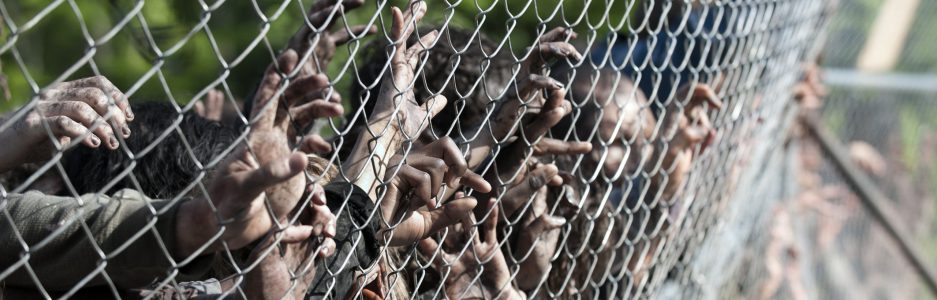
But once the initial panic dies down, how are new zombies created? In DOTD, NOTLD, TWD and FTWD (to list only the most famous texts), we witness in full effect a secondary instinct that prevails among zombies: the instinct to herd. When set upon by a dozen (or more) zombies, victims aren’t merely bitten, they are torn apart. No chance for reanimation here. It seems to me that the vast majority of zombies walking around are those that reanimated in the earliest stages of the outbreak…. those who were killed by a latter-day zombie horde are unlikely to have enough bodily integrity to rise again.
This idea is further complicated by the fact that most zombie texts contradict the notion that the bite spreads infection. TWD is explicit about the fact that “everyone is infected”; the bites cause death, but reanimation is caused by something else that was already present in the body of the victim (whether it’s a virus or something else is unclear).
For his part, Romero’s canon is a little unclear on the point of reproduction. In his films, there never is a definitive instance of a person dying and coming back without having been bitten in any of his major zombie films (I ignore Diary and Survival, which I don’t consider part of his canon). But there is a deleted scene in Land of the Dead that has a zombie reanimated after a suicide-by-hanging, though I tend to disregard evidence derived from deleted scenes. And in Savini’s remake of Night of the Living Dead, Ben reanimates after a gunshot wound, not a bite. So while there’s some confusion on this point, I would argue that zombies by-and-large do not reproduce by biting.
Anyway, all this talk of eating and biting has me ready for lunch. Food for thought I guess.
LikeLike
Jason, these are all excellent points. One of the problems here, of course, is that we’re trying to pin down the ‘nature’ of an imaginary creature that, while it has a tradition, is always being reinvented, modified, and exists in multiple iterations at once. The work that has to be done–and you show that you’re already doing it–is thinking about the implications of the differences you note: if the zombie is a figure of thought (figure for thought?), then what is the meaning or significance of a particular mode of transmission? But you are absolutely correct: saying that the zombie reproduces through biting without qualifying that statement along the lines you suggest was definitely a mistake on my part. And I’m aware of most of what you say, too–so, it’s a bit weird that I was so attached to the biting thing. One of the liabilities of trying to think in boxes and tables, I suppose. (I blame the vampires.) At the same time, biting clearly plays a prominent role in most zombie narratives–so maybe the mistake I made was limiting a consideration of biting only to the matter transmission. As you point out, in the Walking Dead, a bite will kill you (which is why it’s game over if you’re bitten unless someone can hack off your arm or leg before the infection spreads) but it doesn’t actually make you a zombie. I’m going to have to think more about the always-already infected motif in that show. The other great point you make is about sustenance. That’s just a straight-up mistake on my part. Being dead, the zombie doesn’t need other life to keep it alive, it ‘eats’ to spread itself as the carrier of something (though if zombism is a virus, then the virus is ‘alive’ even if the host is dead. This can get confusing.) I just read a zombie book called The Troop by Nick Cutter. It’s only sort of a zombie tale, but it involves voracious cannibals whose appetite is triggered by a modified tapeworm. In that case, it’s a clear example of a second organism hi-jacking the human body for its own purposes–a little like the Girl with All the Gifts. So there are some zombie tales in which sustenance is required, but in those cases the human host is not dead-dead and when it really dies the parasite or fungus or viral hijacker either dies too or enters a different phase. All this hair-splitting is necessary, but it also risks putting the very concept of ‘the’ zombie or a ‘zombie’ narrative in jeopardy–and then what will I do? Thanks for the help; should anything come of this, you’ll get credit.
LikeLike